
"Copilots give answers, but agents act. If 2025 was the year of the copilot, 2026 is the year agents enter the decision loop of manufacturing operations."
Over the past two years, AI on the factory floor has mostly been an assistive tool that answers when asked. The operator asks a question; the model produces an answer based on manuals or historical data — the copilot paradigm. But through the second half of 2025, the current clearly shifted. The topic now is autonomous agents — agentic AI — that perceive a situation on their own, reason about it, decide, and actually act. Deloitte projects that the share of companies using generative AI that deploy autonomous agents will double from 25% in 2025 to 50% in 2027, and reports that in manufacturing alone, agentic AI adoption jumped nearly fourfold this year, from 6% to 24%.
This article is not meant to showcase a passing technology trend. Drawing on primary sources, it examines what exactly agentic AI automates in manufacturing operations, which companies have delivered real results, and why warnings that nearly half of all projects will fail are appearing at the same time. To state the conclusion first: an agent's success or failure is decided not by how smart the model is, but by the data foundation and governance underneath it.

Autonomous manufacturing operations work not on flashy models, but only on trustworthy real-time data.
1. From Copilot to Agent — What Changed
The difference between a copilot and an agent lies in the depth of autonomy. A copilot organizes information for a person, but an agent takes a goal, plans multiple steps on its own, calls tools, verifies the results, and decides its next action. Gartner projects that by the end of 2026, 40% of enterprise applications will embed task-specific AI agents — a change happening in barely a year, up from less than 5% in 2025.
In a manufacturing context, this difference is decisive. "Detecting and reporting" an equipment anomaly is one thing; detecting the anomaly, inferring the cause, generating a work order, checking spare-parts inventory, and proposing a purchase order is an entirely different order of operational burden. Siemens is integrating advanced AI agents into its Industrial Copilot portfolio, moving toward a stage of "executing entire AI processes without human intervention," and states that its operations copilot reduces reactive maintenance time by 30%.
2. Why Manufacturing, Why Now — The Adoption Curve Has Inflected
There are good reasons manufacturing has become the main stage for agentic AI. Manufacturing operations have all the conditions under which agents create value: clear objectives (availability, yield, on-time delivery), abundant sensor data, and repetitive decision-making. Market data backs this up.
- The manufacturing AI market is valued at roughly USD 34.18 billion in 2025, with a projected CAGR of 35.3% through 2030.
- 62% of mid-to-large enterprises are experimenting with autonomous multi-step AI, and 23% are actually operating and scaling agentic AI in at least one business process.
- Siemens reports achieving a 20% reduction in maintenance costs and a 15% improvement in uptime through AI agents.
McKinsey has likewise documented cases of cutting inventory and logistics costs by more than 20% through autonomous routing. One analysis finds the average ROI of agentic deployments is 3x higher than simple automation.
3. Key Use Cases in Manufacturing Operations
Agentic AI is not an abstract vision — it is already concretely at work in four areas of operations: production scheduling, predictive maintenance, quality inspection, and supply chain. Autonomous agents rebalance production schedules in real time, predict equipment degradation and proactively generate maintenance work, judge defects with vision, and track material shortages to coordinate ordering.
The results are especially clear in predictive maintenance. In production environments, AI-based predictive maintenance is reported to reduce unplanned downtime by 20-40% and lower maintenance costs by 25-40%. Predictive maintenance applications have in some cases achieved ROI exceeding 250% within 24 months. In quality, a study of Ontario manufacturers reported defect rates falling by an average of 35% after adopting AI computer-vision inspection.
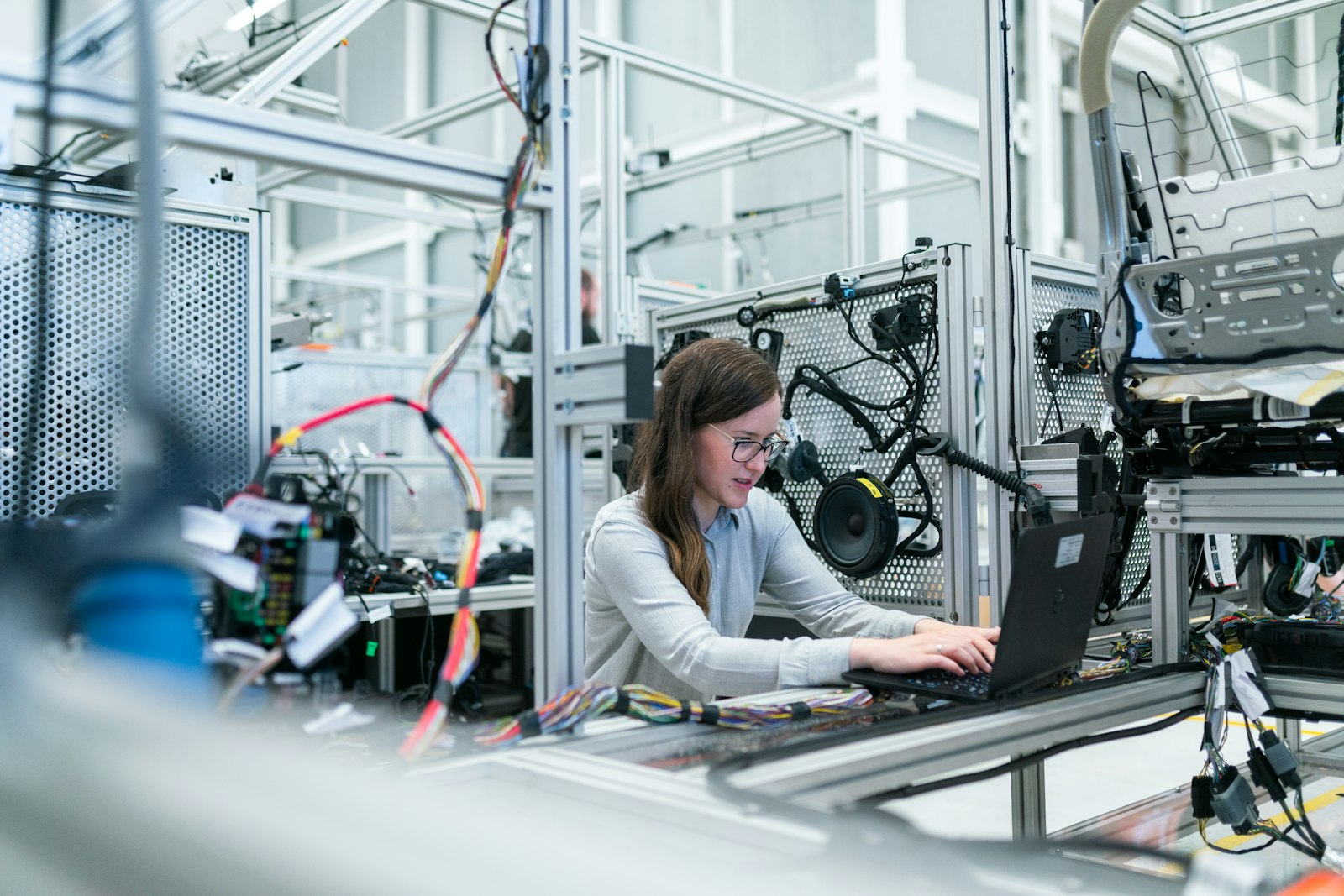
Agents do not replace operators — they take on delegated repetitive decisions so people can focus on judgment.
4. Autonomy Without Governance Fails — Gartner's Warning
It is not all optimism. Gartner warns that by the end of 2027, more than 40% of agentic AI projects will be canceled due to escalating costs, unclear business value, or inadequate risk controls. It also predicts that by 2027, 40% of enterprises will demote or retire autonomous agents because of governance gaps discovered "only after an operational incident."
The core lesson is clear: applying uniform governance to every agent, regardless of autonomy level and scope, leads to failure. The most striking signal in the 2026 agentic AI hype cycle was likewise the rise of "control, accountability, and economics" profiles such as agentic AI governance, agentic AI security, and FinOps for agentic AI. The deeper the autonomy, the more guardrails, traceability, and permission boundaries must become part of the technology itself.
5. Adoption Architecture — It Only Works on a Data Foundation
The most common point where agents fail is not the model but the data beneath it. For an agent to act, it needs trustworthy real-time asset data, a standardized semantic model, and a closed loop that feeds back the results of its actions. In an OT environment where more than 200 industrial protocols are entangled, putting an agent on top of unintegrated data is like building a house on sand.
An effective adoption sequence looks like this. First, create a semantically aligned data layer through multi-protocol ingestion and ISA-95-based asset modeling. Second, deliver time-series and event data on time via an edge-cloud hybrid. Third, design governance with access control, traceability, and approval flows built in from day one. Fourth, deploy agents on top incrementally — starting with the steps that require human approval.
Case Study — Autonomous Predictive Maintenance in a Ceramics Plant
A validation study of agentic predictive maintenance at a ceramics manufacturing facility (MDPI, 2025) provides concrete numbers. The system achieved 94% prediction accuracy, a 67% reduction in false positives, and a 43% reduction in unplanned downtime; the payback period was calculated at 1.6 years, with a five-year net present value (NPV) of roughly EUR 447,300. What stands out is that the source of these results was not the precision of a single model, but a human-centric closed-loop design spanning detection, reasoning, and maintenance generation. The agent did not replace judgment — it armed the operator's decisions with proactive information.
How PlantPulse Answers
PlantPulse from KOPENS (Korea Open Solution Co., Ltd.) is an industrial DataOps platform designed precisely for this "foundation an agent can stand on." It unifies heterogeneous shop-floor data into a single semantically aligned model through ingestion of more than 200 industrial protocols and ISA-95 asset modeling, and delivers time-series and event data on time via an edge-cloud hybrid architecture. Given that an agent cannot act autonomously without trustworthy inputs, this data layer is a precondition, not an option.
PlantPulse also builds in governance — including access control, traceability, and approval flows — from day one, and integrates AI/ML/MLOps into the platform. That means it structurally reduces the "governance gaps discovered only after an incident" that Gartner warns about, and provides an adoption path that raises autonomy gradually, starting with the steps that require human approval. More than flashy agent demos, PlantPulse focuses on the foundation that lets those agents survive in operations.
Closing
Agentic AI clearly has the potential to become the next operating system of manufacturing operations. The adoption curve has already inflected, and validated results are accumulating in predictive maintenance, quality, and supply chain. But the same analyses warn that nearly half of all projects will run aground for lack of governance and a data foundation. Depth of control must keep pace with depth of autonomy.
In the end, the question is not "should we adopt agents" but "are our agents standing on trustworthy data and governance." Autonomous manufacturing begins not with smart models but with solid foundations. (References: Deloitte, "Agentic supply chain in manufacturing" (2025); Gartner press releases — 40% agent adoption forecast (Aug 2025) and 40% project cancellation forecast (Jun 2025); Siemens-NVIDIA industrial AI partnership announcements (2025-2026); McKinsey, "State of AI 2025"; MDPI Applied Sciences, "Agentic AI in Smart Manufacturing" (2025).)
© KOPENS — Industrial DataOps & PlantPulse Platform